The thoughts and background behind the message "Become an iki oji again"
I think every company has people who get labels stuck on them without any say, like "the ojisan who doesn't work" (ojisan: a middle-aged man) or "the window-side tribe" (people sidelined to a desk by the window).
Behavioral psychology has the 2:8 rule (the 80/20 rule), and part of this is bound to come out of how organizations are built, but if I left it at that, there'd be no point writing this article. Haha.
What I want to say is that the so-called "ojisan who doesn't work" is actually a "recharging ojisan," or an "ojisan with untapped potential," or the organization's "safety-harness ojisan," doing an important job that no one can see, and doing it well. I wanted to put that into words.
And I want the ojisan who've gone a bit sulky over those labels to get their real energy back, and get their own happiness back.
That alone lets the younger generation naturally carry on the ojisan's skills and spirit, and lets the generation carrying the load right now keep working hard and feel even better about it.
Once an organization recognizes this structure, its "happiness stage" moves to another dimension, and I think it changes in a lasting way, right down to the mood in the company and the company's reason for being.
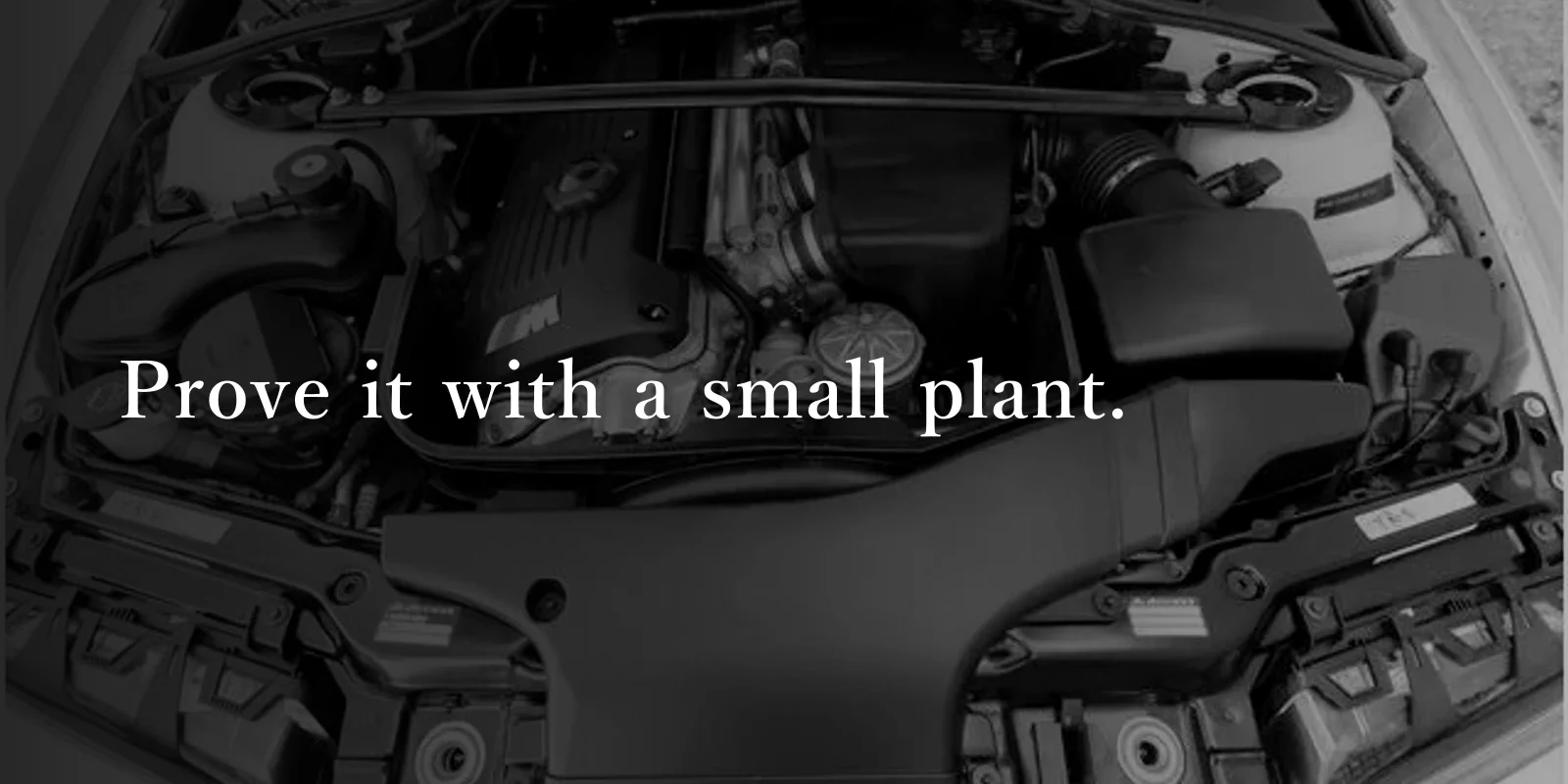
Through TSUNAGI///M (the tools I make for the BMW E46 M3), I keep putting out one of the things that can start that kind of chain of happiness.
In this post, I'm writing down in detail why I changed this site's headline to "Become an iki oji again," and the thinking behind it. (Iki, 粋, is the Japanese word for a certain stylish cool; oji is short for ojisan.)
The "ojisan who doesn't work" has a sharp shine, like a knife
Back when I was a company employee, I often became friends with these "ojisan who don't work."
Listening to them, I always thought: it's not that they lack ability. In fact, the overwhelming majority of them have "something that shines" that other people don't.
I talked with those senior colleagues, went drinking with them, had them share their outstanding skills and knowledge, and put it to use in my own work.
But copying all of it was impossible. I felt it for real: you can't catch up with the experience someone has piled up their own way over decades.
If an organization sets out to achieve something big, I believe there are places it can never reach without borrowing the strength of people like that.
Forces one person can't fight
Back then, in my twenties, I decided the middle managers who couldn't make use of these men's strengths were incompetent, and I couldn't stand them.
(It was much later that I realized this was why, in pushing the company's digital transformation, I ended up carrying everything by myself and struggled for lack of hands.)
Now in my forties, I also wondered whether the fault lay with the executives who put managers like that in place. But looking at it from above, from the same position as theirs, I became convinced that this is "not something any one person can control."
To put it a little more simply, borrowing from the novel Kubiki no Tami ("The Yoked People"): if you compare the flow of money to a "lazy river" pool, one person swimming against the current won't change it.
All you can do is let it carry you, break the pump if you want to stop it, or rebuild the pool itself if you want to change the flow.
In Kubiki no Tami, the one making the flow was the central bank. But as I see it, today the current in the pool is made by a "big vector of people's intentions," born from all kinds of people (institutional investors, individual investors, crypto investors and so on) reading each other's moves.
In the same way, once I thought of an organization's shape and the flow of its work as made not by any one person's intentions but by the "combined vector of intentions" of the people inside it, it clicked.
You can't change reality, but you can change the world you see
In my twenties, young as I was, I was all fired up to change the organization with my own strength. I'd like to tell that younger me, "Don't bother."
But on the other hand, there are things you can't see without going through it, and there was a world I was glad to see precisely because I butted heads with the organization. So I'd also like to tell him, "Go all the way."
After I went out on my own, this contradiction confused me and I lost my way, so I started talking to a mental coach.
The coach recommended zazen (seated Zen meditation), so I tried it, and the priest at the temple taught me that in the end, "life comes out to ±0" (it all evens out).
Put simply, it's a guiding way of thinking: seeing it that way lets you move forward more lightly and doubt less.
Thinking about that, I felt that whether you enjoy a life with big swings or a stable life is simply a personal choice.
What I want to say is a proposal: "How about raising the ±0 baseline itself, at the level of organizations and society?"
It's hard to put into words, but lately you see multiverses and parallel worlds a lot in movies, manga and games, right?
To borrow Spider-Man's multiverse: I'd like to dig into the idea of worlds whose reality is a little different, and of every world's reality changing a little by being connected, but here I'll keep to one point. There are many worlds, each seen and felt by its own Spider-Man, and each world's Spider-Man goes through his own twists and turns and trial and error, and yet each Spider-Man's way of being ends up at the same place: "your friendly neighborhood Spider-Man." That is the ±0, the axis of being Spider-Man.
In reality you can't pick the real world yourself, but in your mind, can't you change how you see it and how you feel it?
In other words, I think changing how you see and feel is exactly what choosing your world yourself means.
So the ±0 can be made many times over, depending on the timeline a person feels. It means thinking not in three dimensions, the way augmented reality does, but in higher dimensions, with several worlds set side by side.
So, since fighting the current of that huge pool head-on only wears you out, what I wanted to say is, first of all: "Isn't it a better deal to choose what makes you feel good, from the heart, every day?"
Why they got tired, and what they think about now
When I talk in depth with the so-called "ojisan who don't work," it seems to me many of them were glinting and sharp like a killer's knife when they were young.
They have their own convictions, and a strong aesthetic, a personal code, that makes them stick to those convictions all the way.
But against the organization's pressure to conform, or rather the huge "collective vector of intentions" that forms inside an organization, one person couldn't hold out.
I think they just fought it head-on too hard, got tired, and ran out of energy.
And yet, if they think about moving to another company, the pay and benefits where they are now are too good; there's not one bit of upside in going out of their way to wear themselves down further somewhere new. That's the structural flow that produces "the ojisan who doesn't work."
Why they can be the organization's "safety harness"
When I put this into words, some people may think, "Then why not just set things up so the ojisan who don't work get paid less?"
Some companies probably do exactly that. But isn't it exactly those companies where turnover is rising among "the talented young and mid-career people the company really wants to keep"?
Because psychological safety is damaged at the root.
I think the people working hard now can step on the gas without being crushed by fear precisely because those ojisan are right in front of them as a precedent (just by being there), saying "even if you go all out and fail, or burn out, life works out somehow."
In that sense, as the organization's "safety harness (safety net)," they're already doing an extremely important job.
From the younger generation's side, you might get irritated: "I'm working this hard, so why is that guy getting paid twice what I get?" (I used to feel the same.)
But rather than aiming your anger there, you're better off looking at "the safety benefit of being protected even if you fail someday."
Better still, I think it's good to take a step toward that ojisan and ask him to share some of "the sharp ability he used to have," which he keeps hidden.
Just by changing your viewpoint, the timeline you see crosses into another dimension. I really want you to taste that thrill.
Once again, an "iki oji" who's drunk on himself
And from here on is the real focus of my message.
To you, the young guys and ojisan, who used to have an edge.
Are you really fine with your life as it is?
Isn't it far too much of a waste to leave those fangs of yours asleep?
Not by how other people see you or by the company's yardstick, but by reclaiming the cool you that you used to be, or rather, by taking pride in your own way of living: don't you want to get back "the you who's drunk on yourself" once more?
I don't think you need to feel it directly through your work at the company.
Housework, a hobby, supporting young people as they grow: anything is fine, as long as it stirs your heart.
If I'd stayed a company employee, I'm sure I'd have been labeled "the ojisan who doesn't work" myself. Haha.
Getting that label goes against my aesthetic, so I chose to go out on my own. Now I've put the label TSUNAGI///M on that aesthetic, and I keep losing myself in expressing what I live for and my aesthetic, 100%.
Not worrying about anyone's judgment, I keep exploring and polishing simply because it stirs my heart. This feeling of truly living my own present is off the charts, and I'm proving it with the way I live.
I feel the word iki (粋) holds a cool aesthetic, staying true to yourself, being consistent, like the dads of the Showa era (1926–1989) had.
In my own way, I want to steer the collective vector of people's intentions, even just a tiny bit, in an "iki direction."
I used to use the textbook word "sustainable," but it was too abstract.
The conclusion I reached after a lot of inner conflict and twists and turns is that "establishing yourself within yourself, and trusting your own senses all the way" is what ends up producing the truly "sustainable."
And believing in yourself is "the power to live"; it's "life force" itself.
What life always needs to keep going is "reproduction (releasing energy and passing it on)." That's why I deliberately put into the word "iki (粋)" a meaning that calls up a little eroticism and the pulse of life. (Iki is also the Japanese word for living, the same iki as in ikigai, and the word has long carried a hint of allure.) This is a world where grown-ups have fun for real, so it's better to have at least that much of a glint in your eye. Haha.
I've transplanted all my know-how and my "iki" into AI (Matrix)
Lastly, I have one important announcement.
I've ended all the services in which I personally did the hands-on work.
That's because I've taken all the know-how, data analysis and thinking on car setup that I've built up on industrial plant sites and in exploring the BMW E46 M3, and finished packaging every bit of it as a "Skill" that AI and tools can carry out, which I call Matrix.
To be blunt, this system handles each owner's preferences and each car's individual differences perfectly, better than I can by hand.
Compared with existing tools (ECUWORX and others) that could only work within a fixed framework, it has reached "another dimension" in every respect: flexibility, accuracy, logic you can be convinced by, and ease of use. It's truly amazing.
The cost is just 1 MILE (or 10 MILE for shops), bought once on MESH, the platform on this site. With that alone, the tools I've transplanted my sense into support your car, and the engineering you do on it, through AI. The right to use them is yours, forever.
And the really cool part of this system is that it can be rewritten to suit your own sense.
Tuning your car with your own hands, and getting drunk on the thrill of the engine waking up. If you want to step into that "iki grown-up" territory, open the door to MESH.
I'll keep writing the blog the way I always have, with my inner voice at full heat, so I hope you'll stick around.